Every job below is one we do ourselves across Allen.
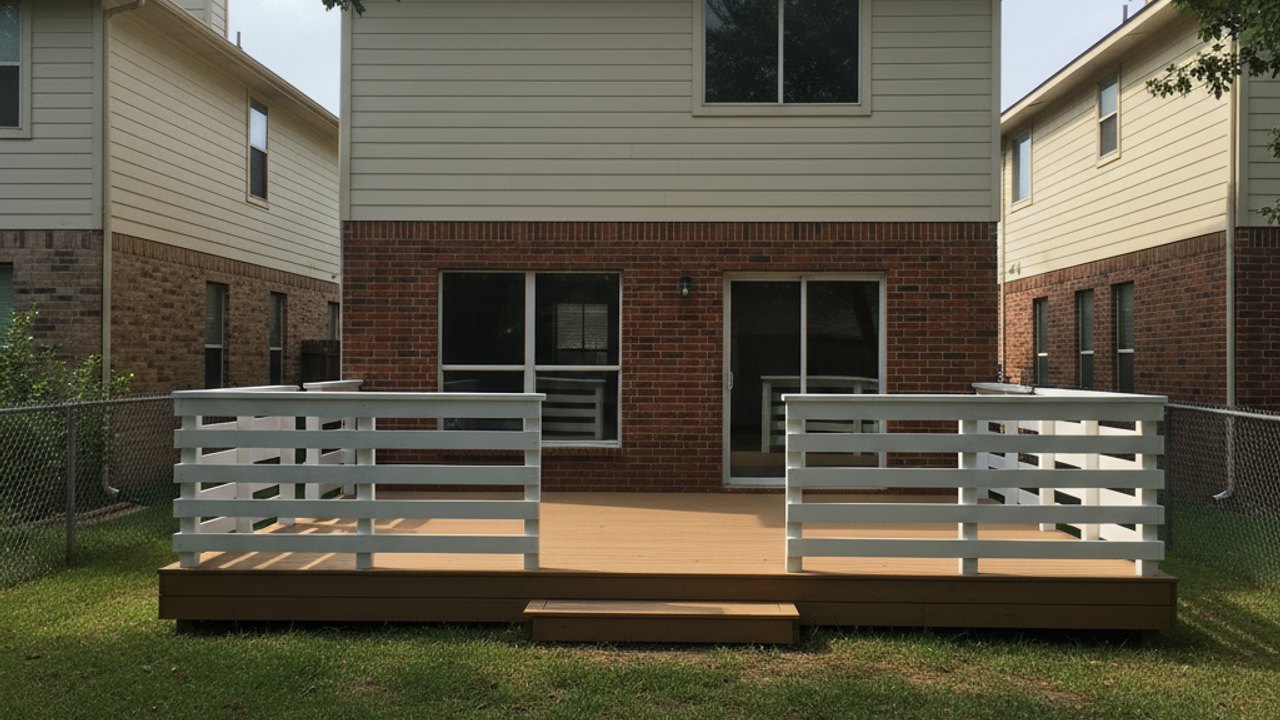
We frame new decks with pressure-treated joists on 16-inch centers, set footings below the frost line, and flash the ledger board so water can't get behind it. Post sizing and span depend on the height and load of the specific deck, not a generic table, so we size the frame to what you're actually building.
Soft boards, wobbly rails, and ledger boards pulling away from the house are the three calls we get most. We replace what's rotted, re-flash where water's been getting in, and check the footings before we touch anything above them.
We pressure wash the boards first, let them dry a couple of days, then apply a penetrating stain or sealer depending on the wood. Cedar and pressure-treated pine each take a different amount of product, and skipping the wash just seals the dirt in with the wood.
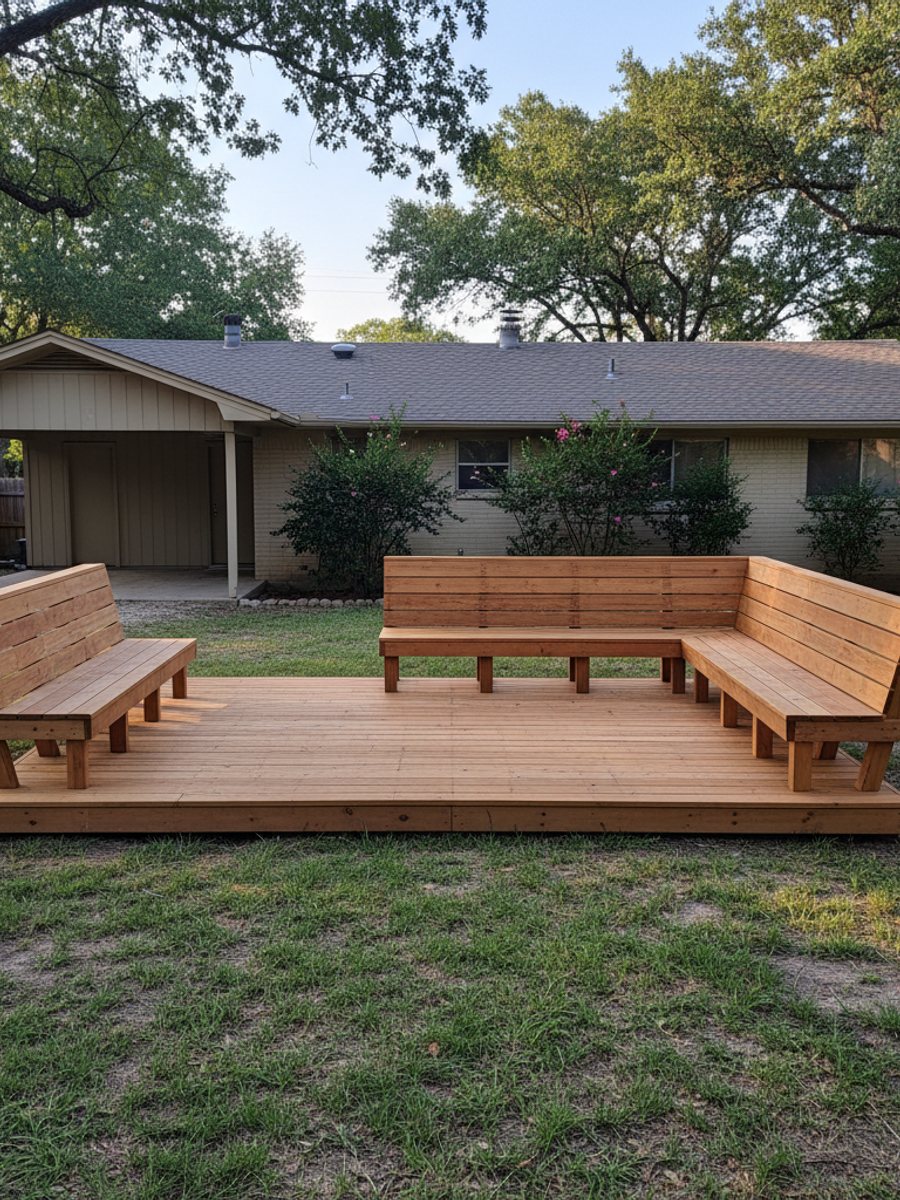
Multi-level decks, built-in benches, curved rail sections, whatever the yard calls for. We draw it out and price it before any lumber gets ordered, so changes happen on paper instead of mid-build.
Composite boards don't rot but they still need proper joist spacing, usually tighter than for wood, and hidden fasteners that keep the surface clean. We install to the manufacturer's spec on gapping, since composite expands more than lumber in the summer heat.
Wobbly rails usually come down to loose lag bolts or a post that was never through-bolted to the frame. We rebuild railing to the 36-inch height most codes call for, and space balusters so a 4-inch sphere can't pass through, which is what an inspector checks first.
If the frame's still solid but the boards are cupped, splintering, or just outdated, we pull the decking and replace it without rebuilding the substructure. It's a faster job than a full rebuild and it costs less, as long as the joists check out underneath.
Old decks get torn out board by board, and we check what's salvageable in the frame before deciding whether to keep it. Hauling and disposal are built into the job, not a line item you find out about later.
A pergola or a solid cover changes how much a deck actually gets used in July. We frame either to tie into the existing structure or stand on its own, depending on what the footings allow, and size the rafters for local wind loads instead of a catalog default.
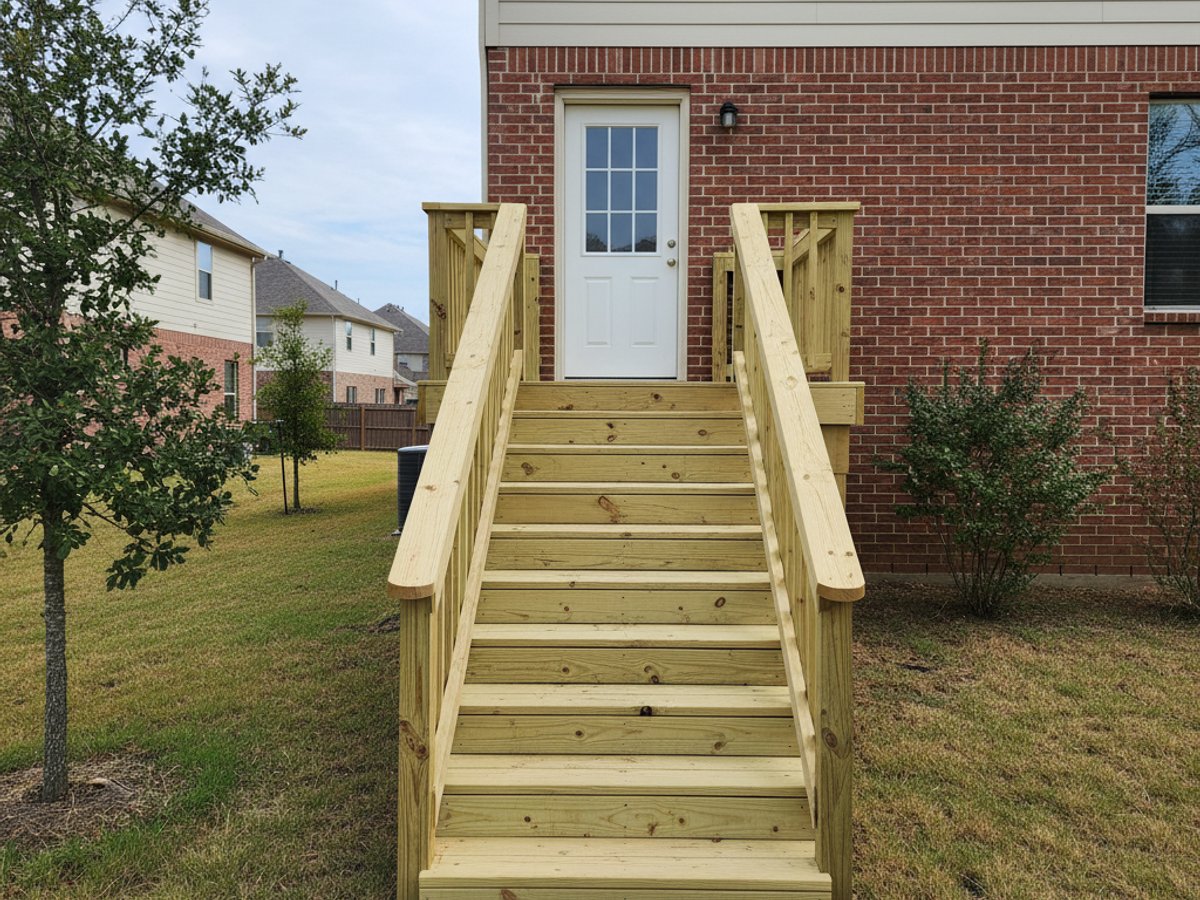
Decks over six feet off the ground carry different code requirements for footings, guardrails and stair stringers. We engineer the post spacing for the actual height involved instead of running the same frame you'd use for a ground-level deck.
Four steps, and no surprises in any of them.
You tell us what you want doing, we look at what is actually there, and we ask the awkward questions early.
In writing, itemised, free. If something might add cost later we flag it now rather than at the end.
Same crew throughout. We cover your floors, keep the dust down and tidy up before we leave each day.
You point out anything you are not happy with and we fix it before the invoice, not after.
Deck installation and repair are available throughout this part of North Texas.
Questions that come up once a deck project is underway.
Describe the problem and we will tell you what it probably is. No obligation.